Trends from our Most Profitable Dairy Farm Customers
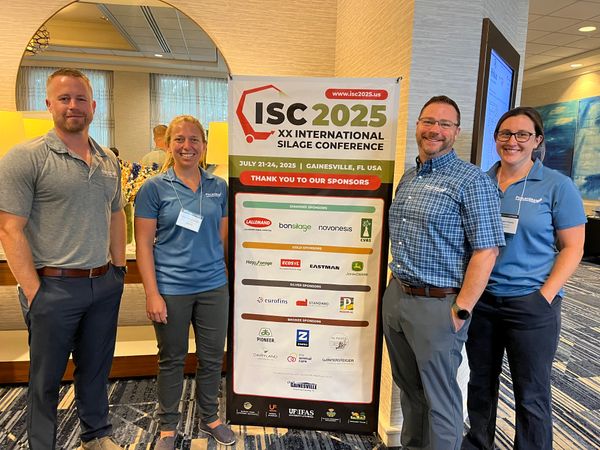
On Thursday, April 30, members of the Poulin Grain dairy nutrition team gathered with industry partners for a day of professional development in Burlington, Vermont. After an excellent and insightful presentation on dairy farm economics from Cornell PRO-DAIRY, the dairy nutrition team broke into four groups for an Income Over Feed Cost, or IOFC, exercise. The goal was to examine commonalities among our most profitable customers and identify opportunities for less profitable customers.
At Poulin Grain, we track net milk income, purchased concentrate cost, and total concentrate cost as part of our Attention Database program. Using this data, each group analyzed its subset of customers, and then the whole team came back together to present their findings.
High IOFC farms are detail focused
A resounding theme throughout the discussion was consistency. Farms that manage all aspects of their business consistently — from feeding to labor to cow comfort — are able to maximize their resources and prioritize quality.
Another key difference that separated the most profitable farms from the least profitable farms was their openness to recommendations and their willingness to work toward a vision that includes new ideas. This allows Poulin consultants to truly integrate into the farm team and help influence positive change. You could feel the excitement in the room as we spoke about these customers.
Higher IOFC correlated to higher performance, and higher cost
Investment was another factor that distinguished farms with higher Income Over Feed Cost. This investment does not always have to be monetary; it can also include time, resources, and long-term strategy.
Investing in building high-quality forage inventory and managing it accordingly is critical to maximizing cows’ potential while optimizing feed cost. Investment in facilities and infrastructure today helps improve cow comfort and health, which has lasting impacts on future generations of the herd. Investing in people through professional development and team growth helps ensure the farm has a highly skilled, reliable staff with long-term career opportunities. Investment in strong genetics to produce quality youngstock today is an investment in the future health and production of the herd.
Last but certainly not least, these higher IOFC herds were generally higher cost as well. Along with their nutritionist, these farms are investing in nutritional technologies with proven ROI that they can measure in the bulk tank, resulting in higher performance and greater overall profitability.
What about the lower IOFC herds?
Farms with lower Income Over Feed Cost had several opportunities in common, starting with improving consistency across management areas. Some of these herds manage and control cost as their primary metric, rather than driving profitability by evaluating IOFC as well.
Our team strategized actions these herds can take to improve IOFC, including reducing overcrowding, improving forage quality, reducing herd health issues such as high somatic cell count and lameness, and prioritizing reproductive health and genetics for the future of the herd.
While motives for success and opportunities for improvement vary across all farm businesses, one commonality remains true for Poulin Grain customers: access to leading animal nutrition supported by our vast team of expertise.
~Written by Alyssa Kealy, Dairy Nutrition Consultant & Outreach Specialist of Poulin Grain Inc. 05.21.2026